
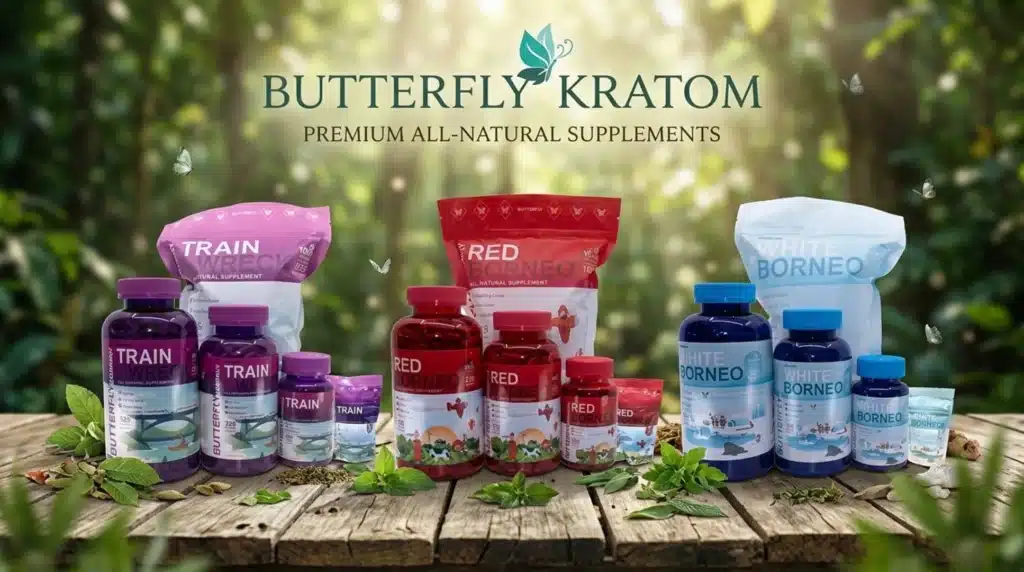
Choosing between kratom capsules and powder involves understanding more than their physical appearance. Both formats originate from the leaves of Mitragyna speciosa, but their preparation, ingredients, manufacturing processes, and packaging requirements can differ. Kratom is available in several commercial formats, including loose botanical powder, capsules, and tablets. Each format has distinct characteristics that influence its presentation, product identification, and storage requirements.
At Butterfly Kratom, product transparency, clear labeling, and quality awareness are important considerations when exploring different botanical formats. This guide explains the differences between kratom capsules and powder, examines their manufacturing processes, and highlights the information consumers should review when comparing products.
Understanding Kratom Powder and Its Characteristics
Kratom powder is produced by drying and grinding the leaves of the kratom plant into a finely processed botanical material. It is one of the established formats available in the kratom marketplace. Its appearance, texture, and color can vary depending on the original plant material, harvesting conditions, drying methods, and processing techniques. Some characteristics associated with kratom powder include:
- Physical texture: Powder may have a fine or slightly coarse consistency.
- Natural appearance: Color can vary between botanical varieties and production batches.
- Packaging: Products are commonly presented in sealed pouches or protective containers.
- Ingredient composition: Basic loose powder generally consists of processed kratom leaf material.
- Batch variation: Botanical materials can naturally differ between harvests and manufacturing batches.
The appearance of powder alone cannot establish its purity, authenticity, or chemical composition. Appropriate laboratory documentation and transparent product information provide more meaningful quality indicators. Understanding these characteristics helps consumers evaluate product descriptions without relying entirely on visual presentation or promotional claims.
What Are Kratom Capsules Made Of?
Kratom capsules contain processed botanical powder enclosed within individual capsule shells. The powder is prepared and placed inside capsules using manufacturing equipment designed for this purpose. The capsule shell is an additional component that distinguishes this format from loose powder. Depending on the manufacturer, capsule shells may be made using:
- Gelatin-based materials
- Plant-derived cellulose materials
- Other formulation-specific ingredients
The exact composition depends on the product. Consumers should review the ingredient declaration to identify the materials used in both the capsule shell and its contents. Capsules are generally packaged in bottles, jars, or other protective containers. Product labels may include the botanical variety, capsule quantity, ingredient information, batch identification, and manufacturer details. Kratom Capsules are available in different package sizes and formulations. However, the number of capsules in a container does not independently demonstrate product quality or chemical consistency.
Kratom Capsules vs Powder: Major Differences
Although both formats can originate from the same botanical leaves, their physical presentation and manufacturing requirements are different. Understanding these distinctions helps explain why manufacturers use different packaging and labeling approaches.
Physical Form and Composition
The most obvious difference is the physical form. Kratom powder consists of loose, ground botanical material. Capsules contain processed powder enclosed within individual shells. This means capsule products may include additional ingredients that are not present in a simple loose-powder formulation. For accurate product comparisons, consumers should examine the ingredient lists rather than assuming both formats contain exactly the same components.
Ingredients and Manufacturing
Loose powder generally involves drying, grinding, processing, and packaging botanical leaf material. Capsule manufacturing includes additional production stages, such as capsule-shell preparation, filling, quality checks, and packaging. Manufacturers may also use different quality-control procedures depending on their equipment and production standards. Ingredient transparency is particularly important when evaluating products with additional components or specialized formulations.
Packaging and Product Labeling
Packaging helps protect botanical materials and communicate important product information. Powder products are commonly supplied in resealable pouches or sealed containers. Capsules are generally packaged in bottles or similar containers designed to protect individual units. A clear product label should communicate relevant details, including:
- Product identification
- Ingredient information
- Net quantity
- Manufacturer details
- Batch or lot identification
- Storage recommendations
- Applicable warnings
Packaging appearance should not be treated as proof of quality. Accurate labeling and supporting documentation are more useful when evaluating a product.
Comparing Kratom Powder and Capsules
Beyond their physical structure, the two formats differ in several practical and manufacturing-related characteristics.
Taste and Texture Differences
Loose botanical powder has a distinct natural taste and texture. Its flavor can vary depending on the plant material and processing conditions. Capsules contain the botanical powder inside a shell, which changes how the product is presented and handled. The capsule shell and any additional ingredients may also influence the overall product composition. When comparing these formats, it is important to distinguish the characteristics of the botanical material from those of the finished capsule product.
Product Handling and Convenience
Packaging and handling requirements differ between powder and capsules. Powder is a loose material that requires appropriate containers to prevent spills and unwanted environmental exposure. Capsules are individually enclosed, making their packaging different from that used for loose botanical material. These physical differences may influence how products are transported, stored, and identified. However, neither format should automatically be considered safer or more suitable based on convenience alone.
Packaging and Storage Considerations
Proper storage is important for maintaining the physical condition of botanical products. Exposure to excessive moisture, heat, and direct sunlight can affect product quality over time. When evaluating packaging, consider:
- Whether the container is properly sealed.
- Whether the product label is readable.
- Whether batch information is available.
- Whether storage instructions are provided.
- Whether the packaging remains intact.
Powder and capsules should generally remain in their original packaging when practical. There is no universal shelf-life period that applies to every product. Manufacturing conditions, packaging materials, formulation, and storage history can all influence product stability.
Price and Product Value
Pricing can vary considerably between kratom powder and capsules. Capsule products involve additional manufacturing stages and packaging materials. These factors can influence their retail pricing. Powder products may have different packaging and production expenses, but price differences alone do not establish differences in quality. When comparing product value, consider:
- Net product quantity
- Complete ingredient information
- Packaging quality
- Available laboratory documentation
- Manufacturing transparency
- Product-specific information
A lower price does not automatically indicate poor quality, just as a higher price does not guarantee better quality.
Understanding Quality and Product Testing
Quality evaluation is an important part of understanding botanical products. Product appearance, packaging, and marketing descriptions cannot independently establish purity or safety. Laboratory testing and appropriate manufacturing controls can provide additional information about product characteristics.
Botanical Identification
Botanical identification testing helps determine whether a submitted sample matches its stated plant identity. This is particularly relevant when evaluating products that are marketed under specific botanical names or varieties. Consumers should look for reliable documentation rather than relying exclusively on product descriptions.
Alkaloid Testing
Kratom naturally contains several alkaloids, including mitragynine. Laboratory analysis may measure selected alkaloid levels in a submitted sample. These findings can help describe its chemical composition. However, laboratory results should be interpreted according to the testing method and sample information. Alkaloid measurements alone do not establish overall product safety or medical effectiveness.
Third-Party Laboratory Reports
Third-party testing can provide additional transparency when evaluating botanical products. Depending on the laboratory and testing program, reports may include information about:
- Selected alkaloid measurements
- Heavy metal screening
- Microbial testing
- Botanical identification
- Other relevant quality parameters
A Certificate of Analysis (COA) should identify the tested sample and provide information about the laboratory and testing date. Consumers should also check whether the report corresponds to the actual product or batch being considered.
Batch Consistency and Transparency
Botanical materials can vary naturally between harvests and production batches. For this reason, batch identification and manufacturing documentation are useful quality considerations. Transparent product information makes it easier to distinguish between general marketing statements and verifiable product details. Manufacturers should avoid unsupported claims and communicate available quality information clearly.
How to Evaluate Kratom Product Formats
Comparing different formats becomes easier when the focus remains on accurate information rather than promotional language. Whether reviewing loose powder, capsules, or other botanical preparations, several considerations can help consumers assess product transparency.
Ingredient transparency: Check the complete ingredient declaration and identify any additional materials used in the formulation.
Product identification: Look for clear product names and descriptions that accurately communicate the contents.
Laboratory documentation: Review available testing reports and confirm that the documentation relates to the specific product or batch.
Packaging condition: Examine whether the container is intact, properly sealed, and clearly labeled.
Manufacturing information: Look for identifiable manufacturer details and available information about production standards.
Product quantity: Check the stated net weight or capsule count to understand exactly what the package contains.
Storage instructions: Follow the manufacturer’s recommendations and pay attention to relevant product dates.
Regulatory information: Consider the applicable laws and product requirements in the location where the product is being sold or purchased.
These evaluation points can also be applied to other kratom products. For example, Kratom Tablets may contain different formulations, additional ingredients, or concentrated botanical materials. Their composition should be reviewed separately rather than assuming that all tablet products are equivalent to ordinary powdered leaf material.
Important Safety and Legal Considerations
Understanding product formats does not eliminate the importance of evaluating potential risks. Kratom can produce adverse effects and has been associated with dependence and withdrawal. Its interactions with medications and other substances are also important safety considerations. Consumers should keep the following points in mind:
- Kratom is not an established treatment for medical conditions.
- Product descriptions should not be interpreted as medical evidence.
- Combining kratom with alcohol, medications, or other substances may introduce additional risks.
- Individuals who take prescription medications or have health concerns should consult a qualified healthcare professional.
- Products should be stored securely away from children and pets.
- Applicable local and state regulations should be checked before purchasing or possessing kratom.
Natural botanical origin does not automatically mean a product is risk-free. Understanding the ingredients, available testing information, and relevant warnings is essential.
Frequently Asked Questions
What Is the Main Difference Between Kratom Capsules and Powder?
The main difference is their physical format. Powder is loose, ground botanical material, while capsules contain the powder inside individual shells. Their ingredients, packaging, and handling requirements may therefore differ.
Are Kratom Capsules Made From Kratom Powder?
Traditional botanical kratom capsules generally contain processed kratom powder enclosed within capsule shells. However, specific formulations can differ, so consumers should verify the ingredient information on the product label.
Do Kratom Capsules and Powder Have Different Ingredients?
Basic loose powder generally contains processed kratom leaf material. Capsules may include additional ingredients associated with their shells, such as gelatin or plant-derived cellulose. The exact composition depends on the manufacturer.
Which Format Is Easier to Store?
Both formats require appropriate storage conditions. Powder is generally kept in sealed pouches or containers, while capsules are commonly stored in protective bottles or jars. The manufacturer’s storage instructions should always be followed.
Do Kratom Capsules and Powder Have Different Shelf Lives?
Shelf life can vary depending on processing, packaging, formulation, and storage conditions. There is no universal expiration period for every kratom product. Check the manufacturer’s date information and storage recommendations.
Are Capsules and Powder Tested Differently?
Some quality evaluations overlap, including botanical identification, selected alkaloid analysis, and contamination screening. However, finished capsule products may also require consideration of capsule-shell ingredients and additional manufacturing controls.
What Is a Certificate of Analysis?
A Certificate of Analysis is a laboratory document that reports analytical findings for a submitted sample. It may include selected alkaloid measurements, botanical identification, and certain contaminant-screening results.
Are All Kratom Tablets Made With the Same Ingredients?
No. Tablet formulations can differ considerably. Some may contain botanical material, while others may include concentrated or additional ingredients. Reviewing the complete product label is important.
What Should Consumers Check Before Comparing Kratom Products?
Consumers should examine ingredient declarations, product identification, package quantity, batch information, available laboratory documentation, manufacturer details, storage instructions, and applicable warnings.
Final Thoughts
Kratom capsules and powder share a botanical origin, but their physical presentation, ingredients, manufacturing processes, and packaging requirements are not identical. Understanding these differences makes it easier to evaluate product descriptions and recognize the information that matters when comparing different formats. Quality evaluation should focus on transparent labeling, reliable batch information, appropriate manufacturing controls, and relevant laboratory documentation rather than appearance or promotional claims alone. At Butterfly Kratom, clear product information and an emphasis on quality awareness are important considerations when exploring different botanical formats. Taking time to understand the available information helps consumers approach product comparisons with greater knowledge and realistic expectations.