
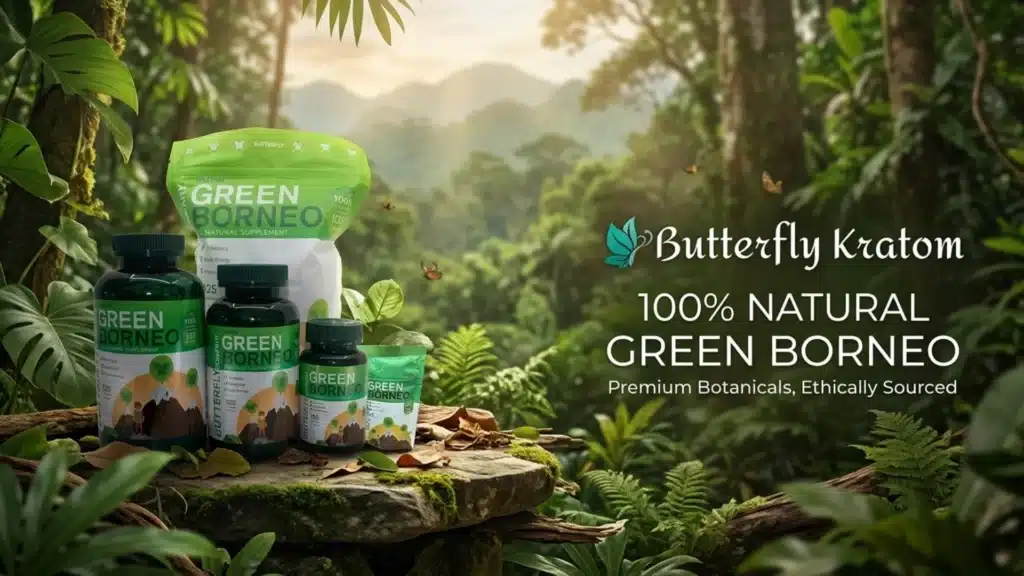
Green Borneo Kratom is a botanical variety associated with the island of Borneo in Southeast Asia. It is recognized by its green vein classification and its connection to the regional kratom trade. For customers exploring different kratom varieties, understanding its botanical background, preparation methods, and product presentation provides useful context before comparing available options.
At Butterfly Kratom, Green Borneo Kratom is part of a product-focused collection designed for customers interested in this particular variety. Rather than relying on broad descriptions, learning about its origin, processing considerations, and capsule format helps create a clearer picture of what distinguishes this selection.
The Botanical Background of Green Borneo Kratom
Borneo is a large island in Southeast Asia, shared by Indonesia, Malaysia, and Brunei. The region is associated with Mitragyna speciosa, the tropical tree from which kratom is obtained. Local growing conditions, including humidity, rainfall, and tropical temperatures, form part of the plant’s natural environment.
The name Green Borneo connects two identifying characteristics: its regional association and the green vein classification commonly used in the kratom marketplace. These terms help distinguish product categories, although they do not establish a standardized chemical profile or guarantee identical characteristics between different batches.
What Defines the Green Vein Classification?
Green vein is a traditional commercial classification used to distinguish kratom varieties. The terminology generally refers to the appearance of the leaf veins before processing and sorting.
Green Borneo Kratom belongs to this category, but the classification should not be treated as a precise measurement of alkaloid content. Natural plant composition can vary according to growing conditions, harvesting practices, maturity, and post-harvest handling.
Understanding this distinction is important when comparing botanical products because a variety name alone cannot establish laboratory composition or predict an individual’s response.
Leaf Selection and Post-Harvest Processing
The preparation of kratom begins with selecting leaves from mature Mitragyna speciosa trees. After harvesting, the leaves undergo several handling stages before becoming a finished botanical material.
Common processing considerations include:
- Leaf selection: Raw material is separated according to visual condition and intended product classification.
- Drying conditions: Moisture reduction is an important stage in preparing botanical material for further processing.
- Grinding: Dried leaves may be milled into a powder suitable for different product formats.
- Batch handling: Keeping production batches identifiable supports better documentation and product traceability.
- Packaging: Finished material requires suitable packaging and clear labeling to communicate product information.
These stages influence the physical characteristics and consistency of the finished material. However, processing descriptions should not be confused with independent verification of product composition.
Green Borneo Kratom Capsules
Capsules provide a pre-portioned format for customers who prefer an alternative to loose botanical powder. Their enclosed design also makes storage and product handling more straightforward.
When reviewing Green Borneo Kratom capsules, customers can pay attention to several details:
- The quantity of capsules included in the package.
- The stated amount of botanical material per capsule.
- Ingredient information and labeling accuracy.
- Batch identification and available testing documentation.
- Packaging condition and storage instructions.
Capsule appearance, package size, and product labeling are useful purchasing considerations, but they do not independently establish purity or safety.
Product Quality and Batch Documentation
Botanical products can vary naturally, making accurate product information an important part of responsible retail presentation. Clear documentation allows customers to understand what a package contains rather than relying exclusively on a product name or promotional description.
For Green Borneo Kratom, relevant quality information may include:
- Botanical ingredient identification.
- Net product quantity.
- Manufacturing or packaging batch details.
- Available laboratory testing records.
- Clear storage and handling instructions.
Laboratory documentation should identify the tested batch and explain which substances or contaminants were evaluated. A general quality statement should not be presented as proof of testing unless supporting documentation is available.
Choosing Green Borneo Kratom With Clear Product Information
Comparing botanical selections involves more than looking at variety names. Customers benefit from checking the actual product specifications and understanding how the material is packaged.
Before purchasing, consider reviewing the following:
- Product format: Confirm whether the selection is offered as capsules or another format.
- Package quantity: Check the total quantity stated on the product listing.
- Ingredient details: Review the complete ingredient information.
- Testing information: Look for accessible documentation that corresponds to the relevant batch.
- Label clarity: Make sure the package communicates its contents and identification details accurately.
These points provide a more practical basis for evaluating a botanical product than relying on generalized descriptions.
Exploring Green Borneo Kratom at Butterfly Kratom
Butterfly Kratom provides product information for customers researching Green Borneo Kratom and its available presentation. Reviewing the dedicated product listing helps visitors examine the specific details provided for this selection.
A useful product description should explain the botanical variety, available format, package information, and relevant documentation without making unsupported claims. This approach gives customers a clearer understanding of the item they are considering.
For anyone comparing different botanical selections, the most useful information is specific, consistent, and easy to verify.
Frequently Asked Questions
What is Green Borneo Kratom?
Green Borneo Kratom is a commercially recognized kratom variety associated with Borneo and classified within the green vein category. It is made from the leaves of the Mitragyna speciosa tree.
Where does Green Borneo Kratom originate?
The name refers to Borneo, an island in Southeast Asia. Kratom is associated with tropical growing regions across parts of the area.
What does the green vein classification mean?
Green vein is a traditional classification used in the kratom trade. It is generally associated with the appearance of leaf veins, rather than a guaranteed chemical composition.
Is Green Borneo Kratom available in capsule form?
Yes, Green Borneo Kratom is marketed in capsule form. Customers should check the individual product listing for package quantity and ingredient information.
What should customers check before purchasing Green Borneo Kratom?
Customers should review the ingredient list, package quantity, batch identification, available laboratory documentation, and product labeling.
Does the Green Borneo name guarantee identical product characteristics?
No. Botanical material can vary between growing conditions, harvests, and processing batches. A variety name does not guarantee identical composition.
How should Green Borneo Kratom be stored?
Follow the storage instructions provided on the product packaging. In general, botanical materials should be kept in their original packaging, away from excessive heat, moisture, and direct sunlight, and securely out of children’s reach.
Final Thoughts
Green Borneo Kratom has a distinct regional name and green vein classification within the kratom marketplace. Understanding its botanical background, processing stages, capsule presentation, and batch documentation makes product comparisons more informative.
Butterfly Kratom focuses on presenting product-specific information so customers can review the details of Green Borneo Kratom with greater clarity. Accurate labeling, transparent specifications, and accessible documentation remain important considerations when evaluating botanical selections.